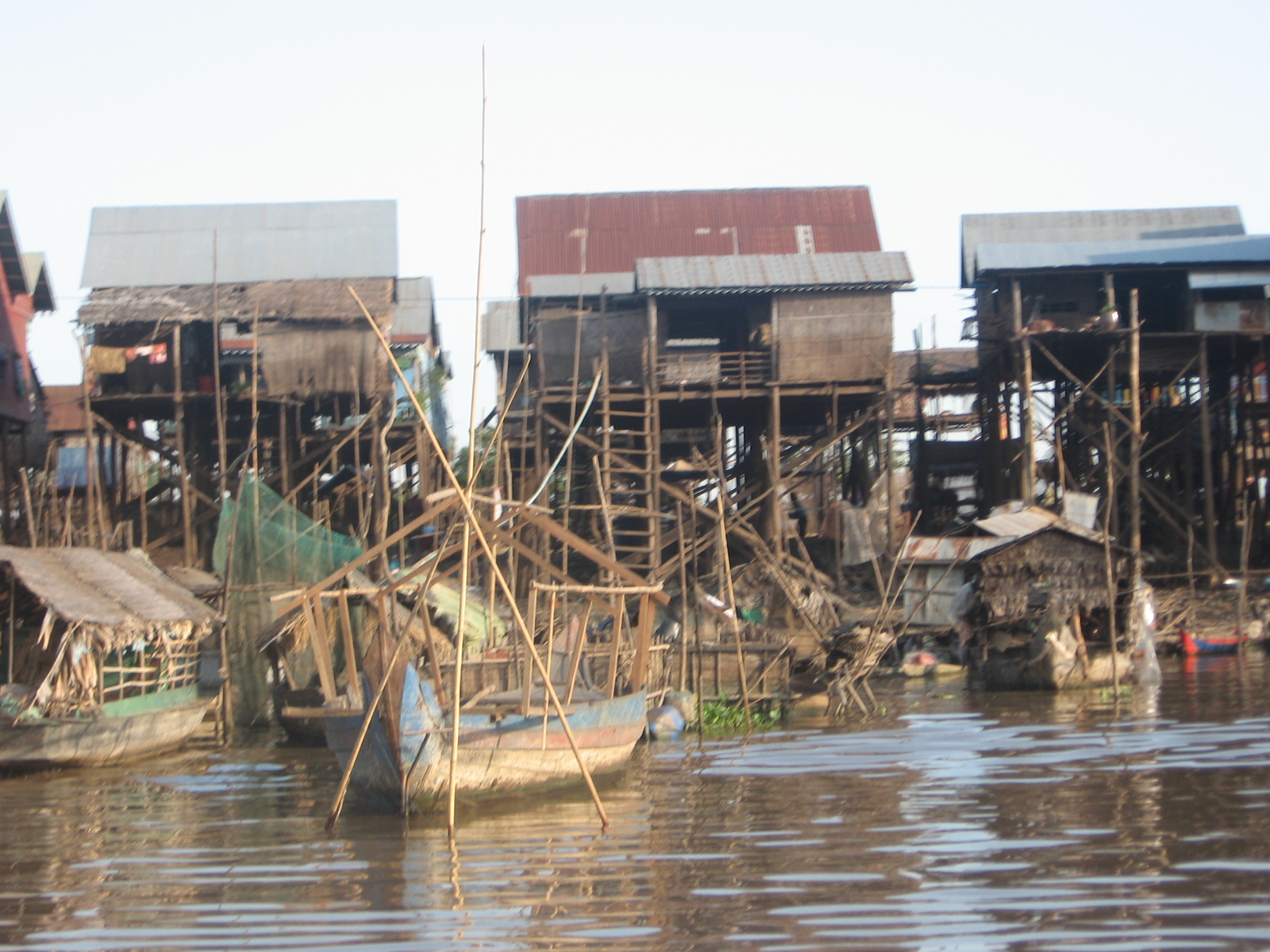
Tonle Sap, the largest fresh water lake in Southeast Asia,
is itself a natural wander. The great lake exist as an ecological anomaly. In
early June, at the start of the rainy season, the water level of the Mekong
River rises to divert part of its flow of its course to the South China Sea and
redirect it into the Tonle Sap. This forces the current to reverse direction,
beginning a process that by the end of October will see the great lake
increasing its size almost tenfold, making it the largest freshwater body in
Southeast Asia.
 The Tonle Sap lake, fed by the mighty Mekong and the Tonle
Sap Rivers, is a vast expense of water that forms the most significant
topographical [natural] feature in Cambodia. The ‘Great Lake’ represents a
people’s identity and way of life for the thousands of Cambodians who live on
the lake and are dependent on the Tonle Sap and its ebbs and flows to maintain
life.
The Tonle Sap lake, fed by the mighty Mekong and the Tonle
Sap Rivers, is a vast expense of water that forms the most significant
topographical [natural] feature in Cambodia. The ‘Great Lake’ represents a
people’s identity and way of life for the thousands of Cambodians who live on
the lake and are dependent on the Tonle Sap and its ebbs and flows to maintain
life.